
Palantir AIP
Rencore monitors Palantir AIP across 18 governance policies, 9 reports, and 17 inventories, detecting ontology risks, access issues, and resource sprawl automatically.
Palantir AIP is in private preview. Join the waiting list and we will reach out when access opens up.
Join the waiting listRencore Palantir AIP governance is a set of 18 policies, 9 reports, 11 segments, and 17 inventories that audit Palantir's Artificial Intelligence Platform for ontology governance, access control gaps, and resource management issues. It detects objects with excessive permissions, users without proper role assignments, and resources consuming capacity without recent activity.
See Palantir AIP in Rencore
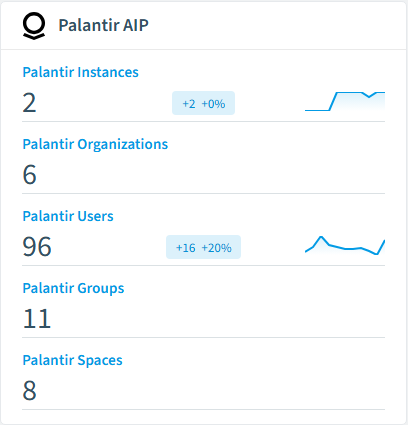
Every Palantir AIP object Rencore discovers and inventories across your tenant.
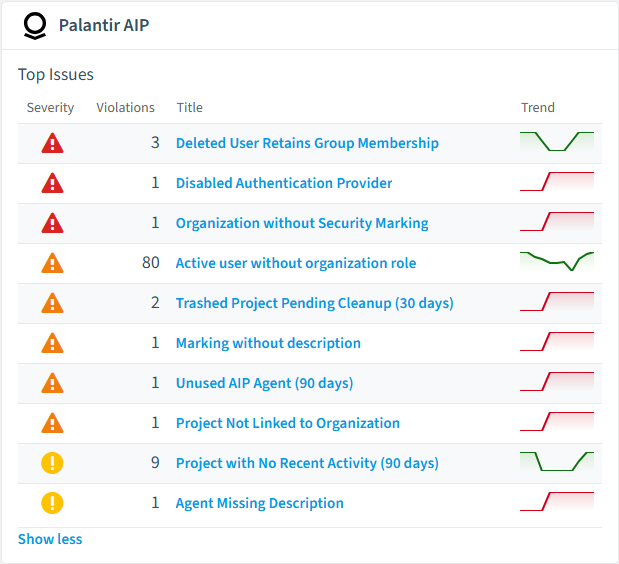
The governance policies Rencore evaluates against Palantir AIP, with severity and category.
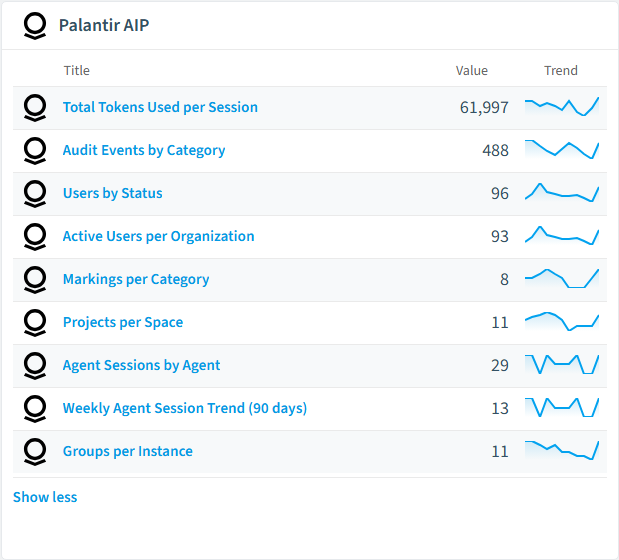
Built-in Palantir AIP reports and analytics views in Rencore.
The Palantir AIP governance dashboard, summarizing risks and status at a glance.
Why govern Palantir AIP with Rencore
Govern ontology access
Detect objects and datasets with excessive permissions, access grants that bypass organizational policies, and ontology resources shared beyond their intended audience.
Control user access
Find users with excessive roles, accounts not linked to Entra ID, and external users without documented business justification. Enforce consistent identity governance.
Track resource utilization
Reports show resource usage trends, most active datasets, user activity patterns, and capacity consumption. Identify resources that need cleanup or access review.
What Rencore discovers
Rencore automatically inventories these Palantir AIP object types.
How Palantir AIP governance works in Rencore
Rencore connects to Palantir AIP via the Palantir API and inventories ontology objects, datasets, users, roles, and resources. Policies run on every scan cycle and evaluate each resource against governance rules, flagging access control, security, and operational issues.
Who uses Palantir AIP governance
CISOs use it to audit ontology access controls and enforce least-privilege principles. Heads of IT track resource utilization and identify capacity optimization opportunities. CIOs use the reports alongside other AI platform data for their enterprise AI governance view.
Getting started
Provide Rencore with Palantir API credentials. All 18 policies activate on first scan, covering ontology objects, users, roles, and resources automatically.
Policies
18 governance rules that detect violations and risks.
Need a rule that isn't listed? Rencore's Policy Builder lets you create custom policies tailored to your organization.
Reports
9 analytics views and dashboards.
Segments
11 data groupings for targeted filtering.
Frequently asked questions
Does Rencore support governance for AI tools beyond Microsoft Copilot?
What is Rencore governance?
How do Rencore policies work?
Related guides
Related reading
- AWS BedrockRencore monitors AWS Bedrock across 30 governance policies, 15 reports, and 19 inventories, detecting model access risks, cost overruns, and usage anomalies automatically.
- Microsoft FoundryRencore inventories Azure AI Foundry with 6 inventory types covering projects, hubs, model deployments, and connections for full AI platform visibility.
- Anthropic ClaudeRencore monitors Anthropic Claude across 26 governance policies, 14 reports, and 11 inventories, covering costs, security, adoption, and data protection for your Claude organization.
Trusted by