
Confluence
Rencore monitors Confluence Cloud across 28 governance policies, 13 reports, and 15 inventories, detecting space sprawl, external sharing, app risk, and unused licenses automatically.
Confluence is in private preview. Join the waiting list and we will reach out when access opens up.
Join the waiting listRencore Confluence governance is a set of 28 policies, 13 reports, 16 segments, and 15 inventories that continuously audit Atlassian Confluence Cloud for sprawl, access, app, and lifecycle risk. It detects spaces with anonymous access, pages shared with external users, third-party apps with broad admin scope, and licensed seats held by inactive users, with 8 automated remediation actions to deactivate users, archive spaces, and remove permissions.
See Confluence in Rencore
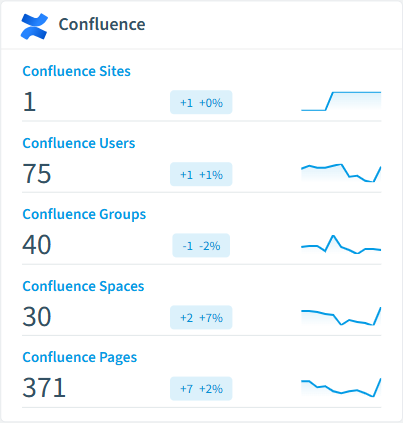
Every Confluence object Rencore discovers and inventories across your tenant.
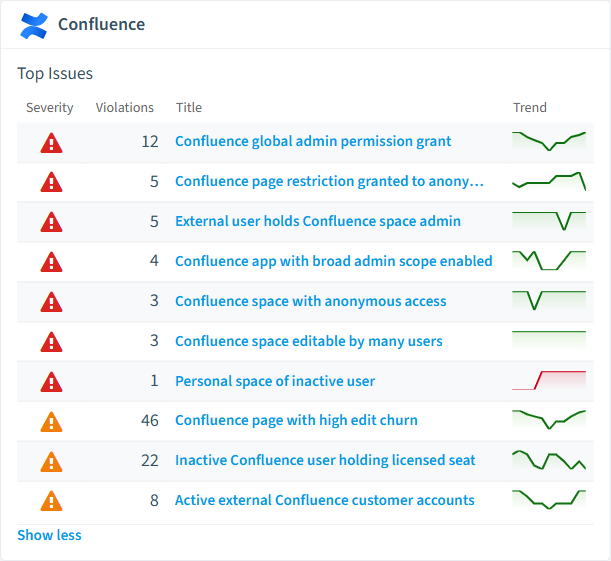
The governance policies Rencore evaluates against Confluence, with severity and category.
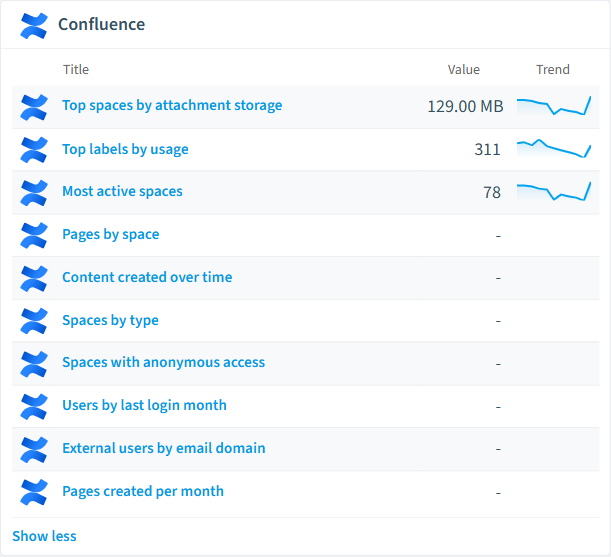
Built-in Confluence reports and analytics views in Rencore.
Why govern Confluence with Rencore
Control space and page sprawl
Detect spaces inactive for 365+ days, empty spaces, orphan pages, stale pages, and personal spaces of inactive users. Archive at scale with automated workflows.
Manage external access and exposure
Find spaces with anonymous access, pages granting view to anonymous users, external users holding space-admin permissions, and external accounts still active after 30 days of inactivity.
Govern Confluence apps
Inventory every installed app, surface apps with broad admin scopes, outdated apps, and inactive apps. Disable risky or unused apps directly from Rencore.
Recover unused licenses
Identify licensed Confluence users who have not signed in, plus empty personal spaces tied to inactive accounts. Reclaim seats and reduce Atlassian spend.
What Rencore discovers
Rencore automatically inventories these Confluence object types.
How Confluence governance works in Rencore
Rencore connects to Confluence Cloud via the Atlassian API and inventories 14 object types: sites, users, groups, spaces, space permissions, pages, blog posts, comments, attachments, templates, apps, audit events, labels, and global permissions. Policies run on every scan cycle and evaluate each object against governance rules, flagging sprawl, access, app, and license risk with severity levels.
Who uses Confluence governance
IT administrators use the 28 policies to maintain a clean, well-governed Confluence environment. CISOs rely on external access and anonymous-access policies to detect data exposure via shared pages. Heads of IT use the 13 activity, storage, and license reports to justify Confluence spend and identify spaces and seats that can be reclaimed.
Getting started
Provide Rencore with Atlassian API credentials. All 28 policies activate on first scan, covering spaces, pages, users, apps, and licensed seats. Eight automations cover the most common remediation paths: deactivate user, archive space, archive page, remove space permission, disable app, remove page restriction, delete personal space, and remove anonymous access. Rencore links Confluence users to Entra ID for cross-platform identity governance.
Policies
28 governance rules that detect violations and risks.
Need a rule that isn't listed? Rencore's Policy Builder lets you create custom policies tailored to your organization.
Reports
13 analytics views and dashboards.
Automations
8 automated remediation workflows.
Segments
16 data groupings for targeted filtering.
Frequently asked questions
What governance areas does Rencore cover?
What is Rencore governance?
How do Rencore policies work?
Related guides
Trusted by